Computer vision · Clé Minit
Mister Minit
A photograph becomes a key reference.
For key duplication, the first task is identifying what is in front of you. Photo-based recognition connects the shape of a physical key to its brand and model.
01 · The problem
Recognition before replacement.
Identifying a key by hand requires matching small visual differences to the right reference. The problem is not simply finding a similar-looking object: the brand and model matter to the next step in the duplication process.
02 · Our contribution
What we built.
Comelse developed the computer-vision component for photo-based key brand and model identification. The work uses image recognition to connect a photograph to a matching reference within the Clé Minit experience.
03 · In practice
A focused model inside a practical journey.
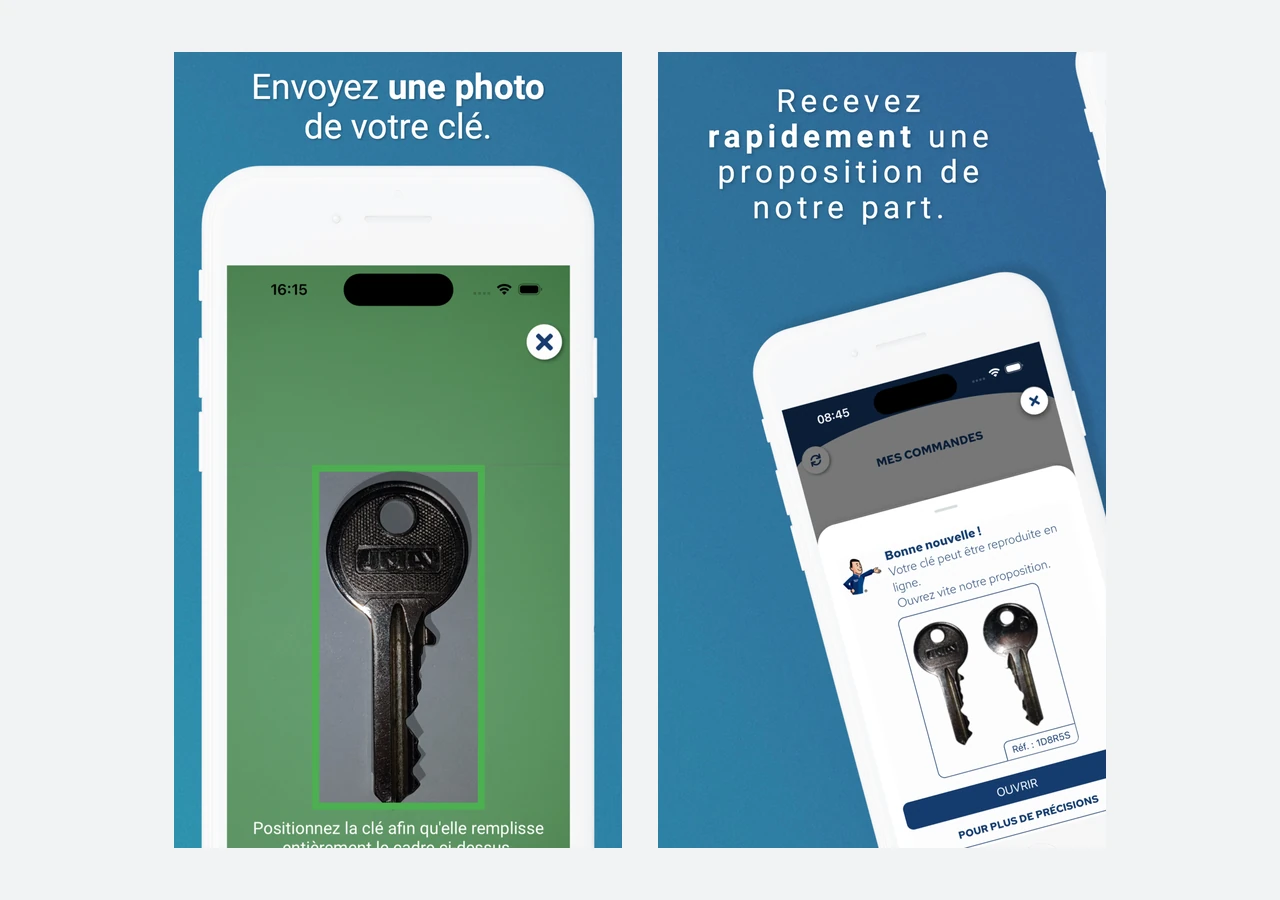
The promotional screens show the useful transition: a customer starts with an object and reaches a proposed key reference. The recognition component serves that specific task. Its purpose is to make visual identification available inside the application, not to replace the entire service around key duplication.
04 · How it works
From input to everyday use.
- 01
Photograph
A photograph of the key provides the visual input for identification.
- 02
Recognize
The image-recognition component identifies the key’s brand and model from its appearance.
- 03
Match
The result connects the photograph to a key reference that supports the duplication workflow.
05 · Scope
Our part in the bigger picture.
Our contribution is the key-recognition engineering within Clé Minit, Mister Minit’s application. The wider customer experience, key catalogue and duplication service belong to Mister Minit.
EngineeringPython · TensorFlow · Keras · Flask
Work with Comelse
Have a workflow to connect?
Tell us who uses it, what needs to happen and where the systems stop talking to each other.